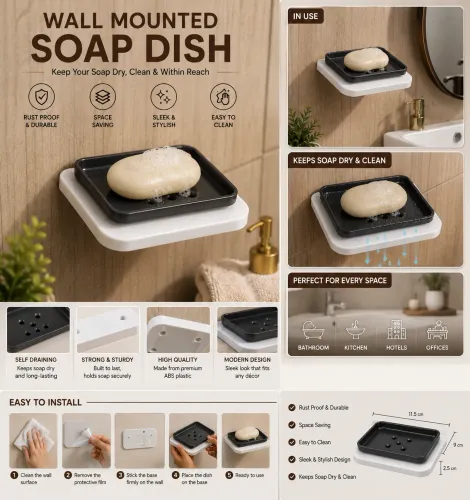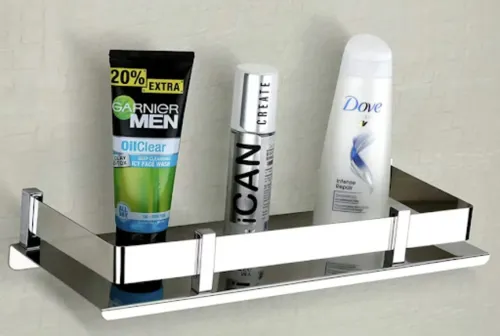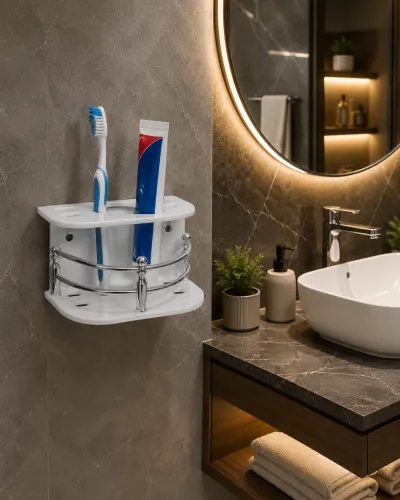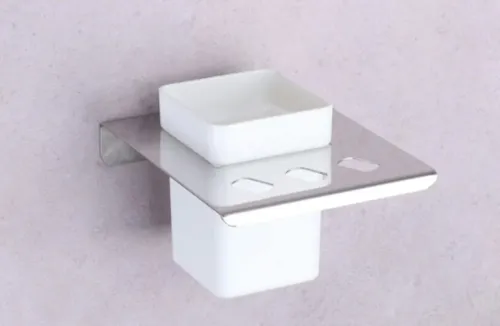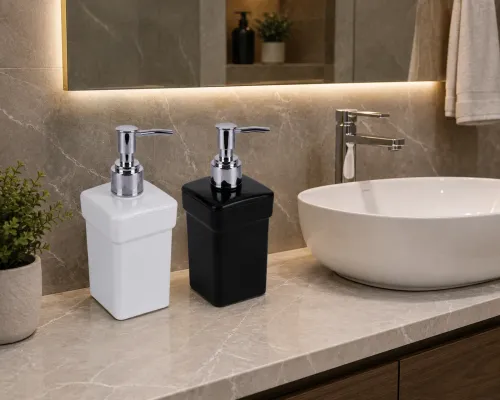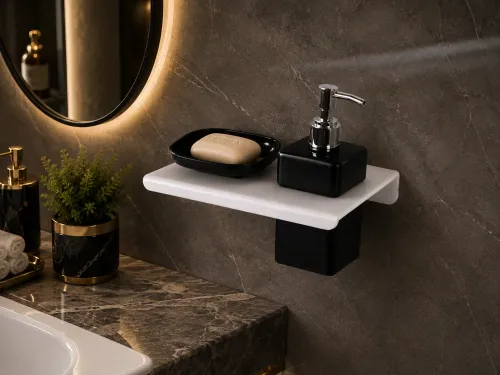
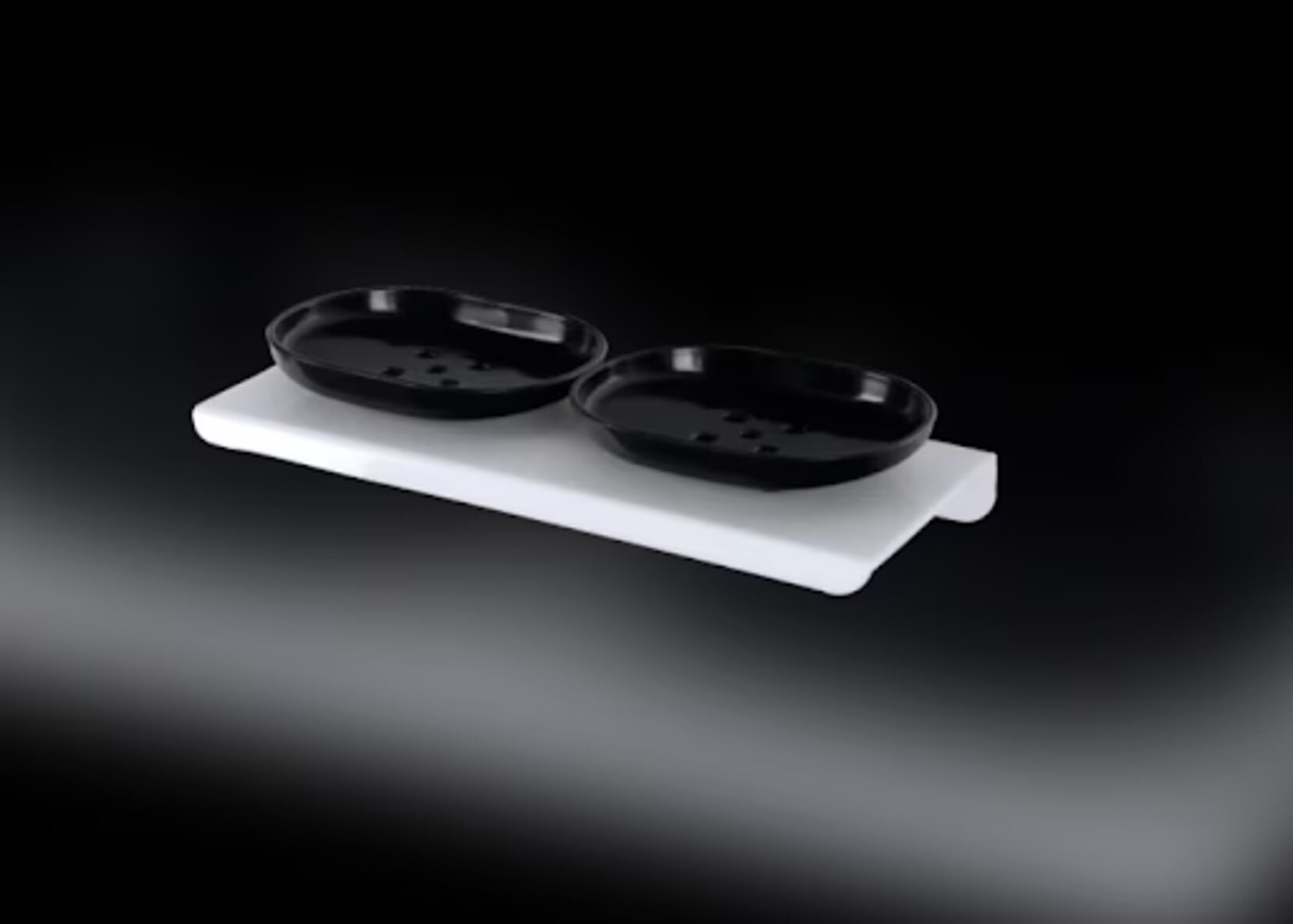
A soap bar left beside the basin collects water, leaves residue on the counter, and competes with the dispenser, toothbrushes, and razors for limited space. You will be able to choose the right storage format, verify its dimensions and drainage, place it safely, and compare acrylic with other materials before specifying one.
Key takeaways
- Choose drainage that keeps the bar above pooled water.
- Match the dish length and width to your soap bar.
- Leave enough counter space for cleaning around the dish.
- Specify acrylic thickness, finish, dimensions, and mounting method before sourcing.
What Practical Storage Does a Soap Dish Add?
A soap dish creates practical bathroom storage by lifting the bar above pooled basin water, limiting soap residue to a defined footprint, and giving a daily-use item a consistent location. That simple separation prevents a wet bar from sliding beside the tap or leaving slurry across the countertop.
| Setup | Storage role | Best fit |
|---|---|---|
| Single soap dish | Holds one bar in a controlled zone | Compact bathrooms and one-person use |
| Soap dish with dispenser | Holds a bar plus liquid soap or hand-washing supplies | Shared basins; review soap dish with dispenser alternative use cases before adding bottles |
| Shelf-based setup | Holds a bar, dispenser, toothbrushes, razors, or refill packs | Shared bathrooms needing several assigned zones |
A single soap dish supports focused bar soap organization without competing for basin space. A dispenser combination gives each hand-washing product a predictable position, while a shelf handles more items but is not automatically better.
Extra capacity also creates more visual clutter, a larger cleaning area, greater mounting load, and more opportunities to block the faucet, mirror, or basin. Bottles and refill packs add impact and cantilever loads, so do not treat a dish as a general shelf unless its mounting system is rated for them.
In a compact or shared bathroom, assign one item per zone: the bar in the dish, liquid soap beside it, and grooming items elsewhere. This reduces countertop competition without buying storage you cannot keep clean.
How Drainage and Bar Fit Determine Usable Storage
Choose drainage by installation position, not appearance. Open slats, a perforated soap dish, and raised ribs and platforms lift the bar above pooled water, reducing soap slurry and keeping the bar usable between washes.
| Option | Drainage effect | Main requirement |
|---|---|---|
| Open slats | Lets water fall through broad channels | Keep gaps clear of residue |
| Perforations | Drains through smaller holes | Check that holes do not clog with softened soap |
| Raised platforms or ribs | Supports the bar above a shallow wet area | Allow for reduced contact area inside the dish |
| Fully enclosed tray | Contains drips instead of releasing them | Add a removable drip tray, sump, or controlled outlet |
A countertop outlet must discharge into a removable tray, sump, or plumbing path, never onto the vanity. A wall outlet must direct water away from grout, timber, electrical fittings, and your hands; downward drainage alone is not enough if it splashes the wall.
Confirm the fit with the actual bar, not the advertised outside size:
- Measure the bar’s length, width, and height.
- Compare those measurements with the dish’s usable inner footprint and cavity height.
- Allow rim clearance so you can lift a wet bar without scraping your fingers or the soap against the edge.
- Deduct space occupied by thick walls, molded rims, and ribs; these reduce the usable area.
A dish that appears large externally can hold a short, narrow bar badly when its internal cavity is cramped. Recheck the fit after accounting for drainage geometry, because raised supports consume part of the footprint even while they prevent standing water.
Where Should the Dish Sit, and How Much Space Should It Use?
Place the dish close enough for one-handed access, but keep the faucet, tap handles, basin drain, mirror, and cleaning cloth clear. Good soap dish placement balances convenience against splash: beside the basin reduces reaching, while a splash zone increases standing water, residue, and cleaning.
| Position | Space and access rule | Main risk |
|---|---|---|
| Countertop | Leave the countertop footprint beside, not behind, the basin; keep the drain and tap handles reachable. | Water can collect beneath the dish or run onto the vanity. |
| Wall-mounted soap dish | Mount beside the basin, below the mirror, with the outlet directed away from grout, timber, fittings, and hands. | A poor height forces reaching or blocks the mirror. |
| Shower | Use a wall outside the direct spray and away from the controls. | Spray loads the dish with water and softens soap. |
| Bathtub | Set it on the outer rim or wall, clear of the bathwater and curtain movement. | A fall can scratch the tub or put soap underfoot. |
Record the total counter or wall footprint before choosing a setup, especially in a compact or shared bathroom. Keep room to lift the bar and wipe behind it.
A heavy base resists sliding and tipping but can scratch without protection. Rubber feet and suction cups reduce movement and scratches; suction works on smooth glass or glazed tile, not grout, porous stone, matte finishes, or textured tile.
Adhesive pads need a clean, dry, smooth surface and the stated wet-area cure time; grout and texture reduce bond area. Mechanical mounting gives the strongest restraint when drilling is acceptable.
Treat bottles and refill packs as impact and cantilever loads, not harmless extra capacity. Verify the tested load before adding them.
Is Acrylic the Right Material for Your Bathroom Conditions?
Choose confirmed PMMA acrylic if you want a lightweight dish with a smooth, consistent appearance and better impact tolerance than ceramic or glass. Ask the supplier to identify PMMA rather than acrylic-look ABS, polystyrene, or SAN: resin identity affects scratch behavior, chemical resistance, UV stability, and manufacturing consistency.
| Material | Practical advantage | Main trade-off |
|---|---|---|
| PMMA acrylic | Light, clean-looking, impact-tolerant, nonporous | Scratches and solvent-induced crazing |
| Ceramic | Heavy, hard surface, stable on a counter | Chips or breaks when dropped |
| Glass | High visual clarity | Breakage risk and slippery fragments |
| Stainless steel | Durable and easy to disinfect | Water marks; grade and finish matter |
| Silicone | Flexible and drop-resistant | Soft texture can catch residue |
| Stone | Substantial, premium appearance | Heavy; porous types need sealing |
| Ordinary plastic | Lower purchase cost | Quality, scratch resistance, UV stability, and consistency vary |
Glossy black can make black bathroom residue more obvious: dried hard-water minerals, soap scum, and lint stand out against reflections. Matte or textured finishes hide reflections but take more effort to clean thoroughly.
For soap dish cleaning, use mild detergent, water, and a soft microfiber cloth. Avoid acetone, ketones, aromatic solvents, concentrated alcohol products, abrasive powders, and rough scouring pads. Do not infer antimicrobial performance from acrylic or black pigment; require a named method such as ISO 22196 for that claim.
What Should You Specify Before Buying or Sourcing the Dish?
Specify measurable fit, drainage, installation, and material details in the soap dish procurement specification; reject “standard size” because domestic soap dishes have no universal dimensional standard.
| Stainless-steel grade | Suitable exposure | What to state separately |
|---|---|---|
| 304 | Ordinary indoor bathrooms | Grade 304, finish, and corrosion-test basis |
| 316 | Higher chloride exposure | Grade 316, finish, and corrosion-test basis |
| Black-coated steel | Not corrosion-proof | Coating does not protect cut edges, scratches, or fastener interfaces |
- Record usable inner dimensions: length, width, and height. Include bar clearance for lifting a wet bar without scraping the rim; thick walls, molded rims, and ribs reduce the cavity.
- Specify drainage geometry—slats, perforations, ribs, or a sealed tray—and state where drips go. Require a removable tray, sump, or controlled outlet; never discharge onto a vanity, grout, timber, electrical fitting, or hands.
- State mounting method, tested load, added bottle or refill-pack load, and surface limits. Identify whether suction works only on smooth glass or glazed tile, and whether adhesive requires a clean, dry surface and a stated wet-area cure time.
- Name PMMA, not acrylic-look ABS, polystyrene, or SAN. Specify mild detergent, water, and microfiber cleaning; exclude acetone, ketones, aromatic solvents, concentrated alcohol, abrasives, and rough pads.
- Define finish tolerance, including black coating coverage at edges and fasteners, then require corner protection, sealed wrapping, and crush-resistant packaging.
HV Enterprise can be considered as a bathroom accessory supplier for residential, hospitality, office, or retail sourcing, provided the product drawing and sample verify PMMA, usable inner dimensions, drainage, mounting limits, finish, and packaging before a larger order.
Frequently asked questions
What practical storage does a soap dish add?
It gives a wet bar a fixed, contained location, lifts it above basin water, and limits soap residue to a defined footprint.
How do drainage and bar fit affect a soap dish?
Drain holes, slots, or a raised insert let water escape, while the dish must fit the bar without allowing it to slide into pooled residue.
Where should a soap dish sit in the bathroom?
Place it within easy reach of the basin but away from the tap’s direct drip path, leaving enough surrounding space for wiping and cleaning.
Is acrylic suitable for bathroom conditions?
Acrylic suits bathrooms when you want a lightweight, easy-to-clean dish with a modern appearance; inspect it for scratch resistance, edge quality, and compatibility with cleaning products.
What should you specify before buying or sourcing a soap dish?
Specify the length, width, height, acrylic thickness, black finish, drainage design, edge treatment, mounting or freestanding format, and required quantity.